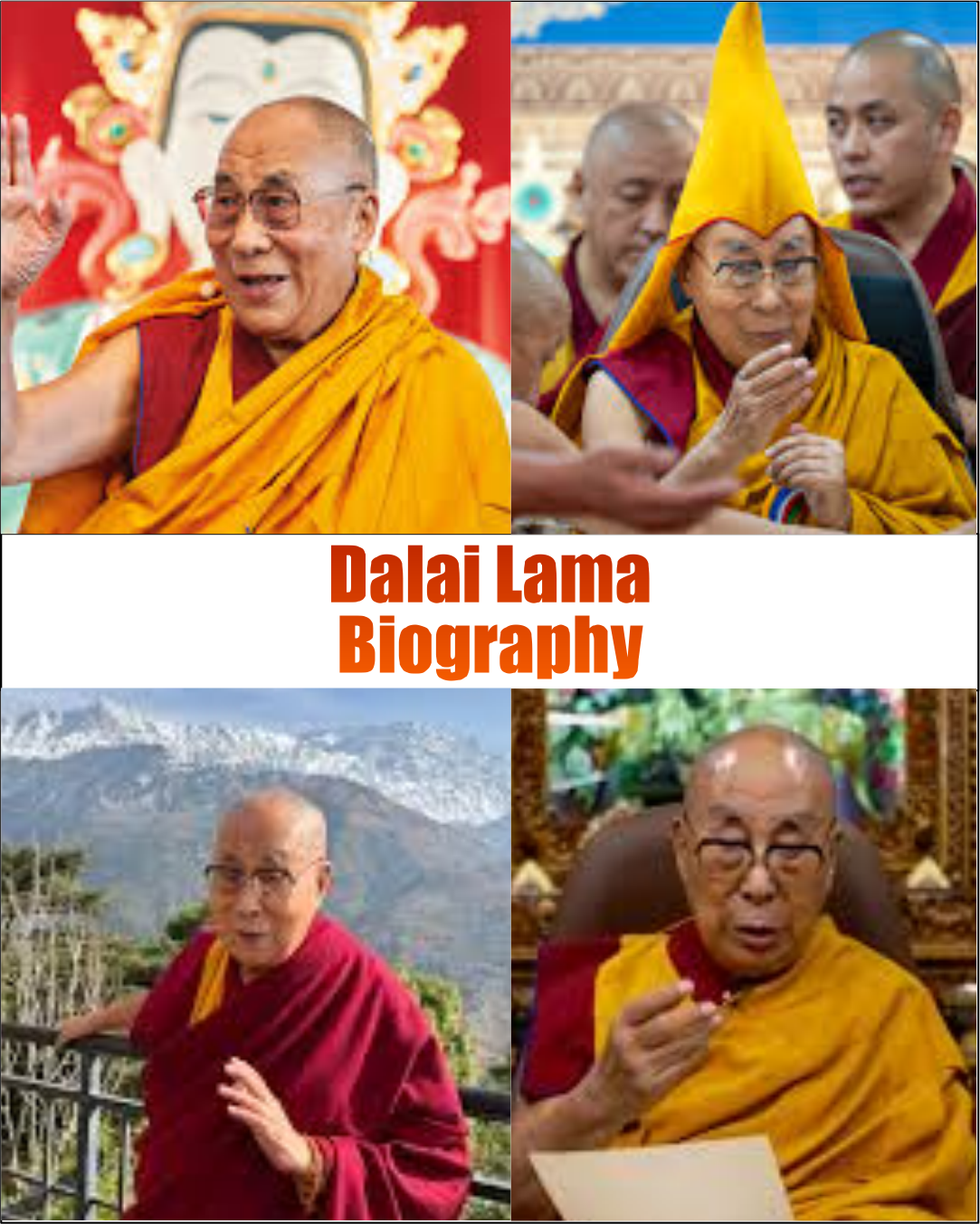
Dalai Lama Biography
The Dalai Lama Biography: The Spiritual Leader Bridging Compassion, Buddhism, and the World
An in-depth, story-driven biography of the 14th Dalai Lama, Tenzin Gyatso—his early spiritual journey, divine calling, teachings, controversies, global influence, lifestyle, and lasting legacy on society and morality.
From the Tibetan Plateau to a Global Voice of Compassion
In the remote valleys of northeastern Tibet, nestled among soaring peaks and snow-laden passes, a child was recognized not just for his uniqueness but for a destiny intertwined with the spiritual heart of a people. Lhamo Thondup, later enthroned as the 14th Dalai Lama, was born on July 6, 1935, in the small village of Taktser. Though Tibet was a land of isolation from the wider world, this child would become an emblem of peace, resilience, and moral authority—bridging centuries-old Buddhist traditions with the modern global conscience. His life, marked by spiritual devotion, political upheaval, and exile, became a story not only of religious leadership but of humanity’s enduring quest for compassion and justice.
Dalai Lama Biography
| Information | Details |
|---|---|
| Full Name | Tenzin Gyatso |
| Title | 14th Dalai Lama |
| Date of Birth | July 6, 1935 |
| Age | 91 years (as of 2026) |
| Place of Birth | Taktser, Tibet |
| Nationality | Tibetan (in exile in India) |
| Occupation | Monk, Spiritual Leader, Author |
| Religious Role | Leader of Tibetan Buddhism |
| Known For | Advocacy for peace, compassion, and nonviolence |
Early Spiritual Journey: Recognition as a Child
Dalai Lama’s early life was modest; born to a farming family, he experienced the rhythms of agrarian life, seasonal rituals, and early immersion in Tibetan Buddhist culture. At age two, monks from Lhasa identified signs that marked him as the reincarnation of the 13th Dalai Lama. This recognition was the result of meticulous spiritual observation: the child’s responses to objects belonging to his predecessor, his instinctive behaviors, and a presence that seemed to radiate calm authority.
By age four, Lhamo Thondup was brought to Lhasa to begin intensive religious training. Early studies included Buddhist philosophy, ritual practices, Tibetan language and literature, and meditation. For a young boy, these were extraordinary demands, yet his capacity for learning and spiritual discipline was evident, signaling a life destined for profound responsibility.
Calling and Divine Encounter: The Recognition of Reincarnation
The recognition of the Dalai Lama is considered in Tibetan Buddhism a profound spiritual event—a child is believed to be the reincarnation of Avalokiteshvara, the bodhisattva of compassion. For Lhamo Thondup, this wasn’t merely ceremonial; it was a life calling, a responsibility embraced with both awe and dedication. By age six, he had taken the formal vows of monkhood, cementing his path as a spiritual guide.
This calling would define his understanding of leadership: not as worldly power but as compassionate service. He reportedly reflected on his youth that the weight of the role was tempered by the clarity of purpose: to guide his people spiritually and morally in alignment with Buddhist teachings.
See also: Fela Kuti Biography: The Rebel Who Turned Music into a Weapon Against Power
Teachings and Doctrines: Compassion and Nonviolence
The Dalai Lama’s spiritual teachings emphasize universal compassion, mindfulness, and the cultivation of inner peace. His interpretations of Tibetan Buddhism stress that personal transformation is inseparable from ethical responsibility toward others. The principles of ahimsa (nonviolence), interdependence, and mindfulness pervade his sermons and writings, making his teachings relevant not only to Tibetans but to a global audience seeking moral clarity in a complex world.
He has authored over 100 books exploring topics ranging from ethics and compassion to the interface between science and Buddhism. His dialogues with neuroscientists and psychologists illustrate a modern approach: bridging ancient spiritual wisdom with contemporary scientific understanding, showing that ethical behavior and emotional intelligence are deeply connected.
Controversies and Criticisms: Politics and Exile
While the Dalai Lama is revered globally, his political role has not been without controversy. The Chinese government views him as a separatist, rejecting his claim to spiritual and moral authority in Tibet. In 1959, following a failed uprising, he fled to India, where he established the Tibetan government-in-exile in Dharamsala. Critics argue that his intertwining of spiritual and political roles blurs lines, but supporters contend that he has maintained a nonviolent approach, advocating for autonomy rather than outright independence.
Some Tibetan factions have expressed frustration with his middle-way approach, desiring more assertive political claims. However, the Dalai Lama consistently emphasizes peace and dialogue over confrontation, demonstrating a rare consistency in ethics amidst geopolitical tension.
Growth of the Ministry: A Global Spiritual Presence
In exile, the Dalai Lama transformed from a Tibetan spiritual leader into a global figure for peace and ethical living. He travels extensively, meeting heads of state, scholars, and religious leaders, delivering teachings that reach millions. His audience extends beyond Buddhists, resonating with individuals seeking ethical guidance, interfaith dialogue, and inspiration in personal growth.
He has nurtured the Tibetan diaspora, preserving cultural practices and language while promoting education and human rights. Institutions established under his guidance, including Tibetan schools, monasteries, and cultural centers worldwide, ensure that the values of compassion and service continue to flourish across generations.
Influence on Followers: Spiritual and Secular Respect
Dalai Lama’s influence transcends religious boundaries. He has received the Nobel Peace Prize (1989) for his commitment to nonviolence and the promotion of human rights, reflecting the global recognition of his moral authority. He has inspired countless individuals to engage in ethical living, meditation, and interfaith cooperation.
From spiritual aspirants in monasteries to laypeople worldwide, his teachings emphasize that compassion is actionable, and moral choices matter. This message resonates deeply in an era of political turmoil, social inequality, and ethical ambiguity.
Lifestyle and Wealth: Simplicity in Exile
Despite global recognition, the Dalai Lama’s lifestyle is modest and focused on service. Living in Dharamsala, India, he resides in simple quarters, maintains a routine of meditation, teaching, and travel, and rejects material excess. While his organization manages funds for cultural preservation and humanitarian work, his personal life exemplifies restraint, humility, and dedication to others.
Legacy and Global Reach
The Dalai Lama’s legacy is profound: a Tibetan monk who became a global symbol of peace, bridging religious, cultural, and political divides. His teachings on compassion, mindfulness, and interfaith understanding have influenced policymakers, educators, and spiritual leaders worldwide. Even decades into exile, he remains an enduring moral compass, shaping discourse on human rights, ethics, and global responsibility.
Impact on Society and Morality
Beyond religious leadership, the Dalai Lama’s impact is societal and ethical. He emphasizes that compassion, ethical behavior, and emotional intelligence are essential for human flourishing. His advocacy for peace, tolerance, and nonviolence has inspired international initiatives and influenced global morality, showing that spiritual principles can guide concrete action in everyday life.
A Life of Compassion and Moral Leadership
Tenzin Gyatso, the 14th Dalai Lama, embodies the fusion of spiritual depth and moral courage. His journey—from a child recognized as the reincarnation of a spiritual leader, through exile, and onto a global platform—illustrates the power of compassion, resilience, and ethical leadership. His life demonstrates that spirituality, when grounded in service and moral clarity, can transcend borders and cultures, leaving a lasting imprint on human consciousness.
Frequently Asked Questions
1. Who is the Dalai Lama?
The Dalai Lama is the spiritual leader of Tibetan Buddhism and one of the world’s most respected figures for peace and compassion.
2. Why is the Dalai Lama famous?
He is globally recognized for promoting nonviolence, human rights, and spiritual wisdom, especially regarding the Tibetan cause.
3. Why does the Dalai Lama live in exile?
He fled Tibet in 1959 following political tensions and has since lived in India, continuing his spiritual and advocacy work.
4. Has the Dalai Lama won any major awards?
Yes — he was awarded the Nobel Peace Prize (1989) for his nonviolent approach to resolving conflict.
5. What is the Dalai Lama’s legacy?
His legacy lies in spreading teachings of compassion, mindfulness, and peaceful coexistence, influencing millions worldwide.