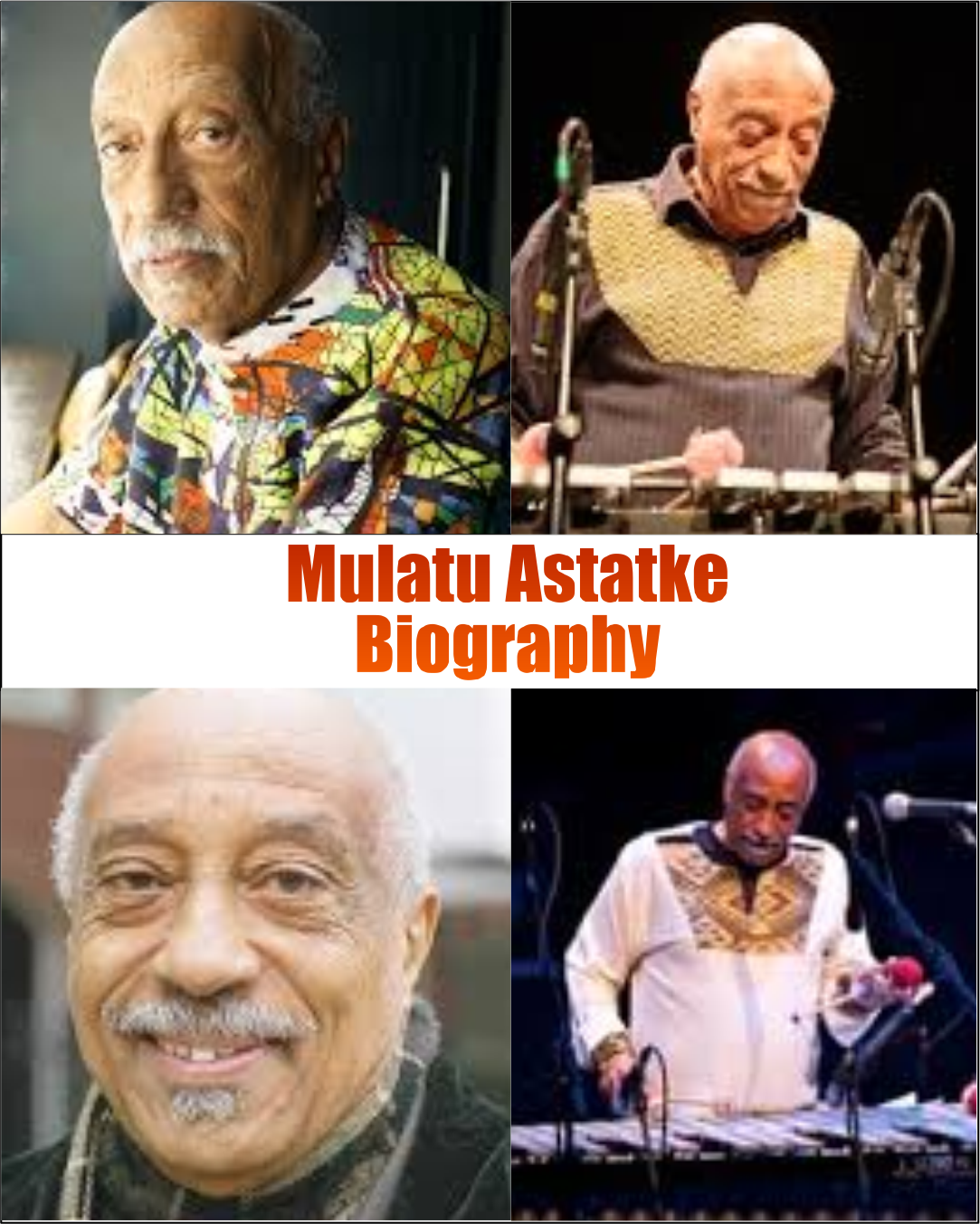
Mulatu Astatke Biography
The Mulatu Astatke Biography: The Visionary Who Invented Ethio-Jazz and Waited Decades to Be Heard
Discover the life of Mulatu Astatke, the Ethiopian pioneer who fused jazz with traditional sounds to create Ethio-Jazz, only to be rediscovered globally decades later.
The Sound That Arrived Before Its Time
Some artists follow trends. Others create them.
And then there are those rare figures who build something so original, so ahead of its moment, that the world simply isn’t ready for it—at least not yet.
Mulatu Astatke belongs to that rare group.
He did not just make music. He created a genre.
A sound that blended Ethiopian pentatonic scales with jazz improvisation, Latin rhythms, and Western instrumentation. A sound that felt both ancient and modern, rooted and experimental.
But when he first introduced it, it did not take over the world.
Instead, it waited.
For years, even decades, his work lived in the shadows—known by some, overlooked by many.
And then, quietly, the world caught up.
Mulatu Astatke Biography
| Information | Details |
|---|---|
| Full Name | Mulatu Astatke |
| Date of Birth | December 19, 1943 |
| Age | 82 years (as of 2026) |
| Place of Birth | Jimma, Ethiopia |
| Nationality | Ethiopian |
| Occupation | Musician, Composer, Arranger |
| Known For | Pioneering Ethio-jazz |
| Instruments | Vibraphone, Piano, Percussion |
| Global Recognition | Soundtrack features in Broken Flowers boosted international fame |
A Journey That Began Far From Home
Mulatu Astatke was born in 1943 in Jimma, Ethiopia, into a family that valued education and discipline.
Like many young Ethiopians of his generation with access to opportunity, he was sent abroad for studies. His journey took him first to Wales, where he initially pursued engineering.
But something pulled him in another direction.
Music.
He left engineering behind and enrolled at the Trinity College of Music in London. It was a decisive shift—one that would define not only his life, but an entire musical movement.
Yet even London was not enough.
Mulatu continued his studies in the United States, attending Berklee College of Music in Boston, where he became one of the first African students to enroll.
There, he immersed himself in jazz, vibraphone, percussion, and composition.
He was not just learning music.
He was gathering pieces of something he had not yet fully formed.
See also: Pastor Tunde Bakare Biography: The Muslim Boy Who Became a Christian Prophet
Building a New Sound From Many Worlds
In the 1960s, Mulatu was absorbing influences from everywhere.
Jazz from America. Latin rhythms from Cuba. Classical structures from Europe. And always, at the center, the musical traditions of Ethiopia.
What he began to realize was simple—but revolutionary.
These worlds did not have to remain separate.
He could bring them together.
The foundation of Ethiopian music lies in its unique pentatonic scales—modes that create a distinct emotional texture. Mulatu began layering these scales over jazz arrangements, adding horns, keyboards, and rhythmic complexity.
The result was something entirely new.
He called it Ethio-Jazz.
Returning to Ethiopia With a New Vision
When Mulatu returned to Ethiopia in the late 1960s and early 1970s, the country was experiencing a cultural moment.
Nightclubs were alive with music. Bands were experimenting. There was energy, curiosity, and openness.
Mulatu stepped into this scene—not as a follower, but as an innovator.
He formed bands, arranged compositions, and began recording music that stood apart from everything around it. His work was instrumental, layered, and deeply textured.
It was not designed for easy listening.
It was designed for exploration.
A Sound That Few Understood
Despite its originality, Ethio-Jazz did not immediately dominate the Ethiopian music scene.
Much of the popular music at the time leaned toward vocal performances and more accessible melodies. Mulatu’s compositions, with their heavy instrumentation and complex arrangements, required a different kind of attention.
They were not background music.
They demanded presence.
As a result, while respected within certain circles, his work did not achieve widespread recognition at the time.
Then, history intervened.
Silence Under a Changing Regime
In 1974, Ethiopia underwent a political revolution that led to the rise of the Derg military regime.
The atmosphere changed.
Cultural expression became more restricted. Nightlife declined. The creative freedom that had allowed experimentation began to shrink.
For artists like Mulatu, whose work thrived on openness and exploration, the environment became increasingly difficult.
His music did not disappear—but it receded.
For years, much of what he had created remained largely unheard outside limited audiences.
The Long Wait
Mulatu did not stop working.
He continued composing, studying, and refining his sound. But the global recognition that often follows innovation did not arrive—not yet.
His records, pressed in small numbers, circulated quietly.
Some found their way into collections. Others faded into obscurity.
For a time, it seemed as though Ethio-Jazz might remain a hidden chapter in music history.
But music has a way of resurfacing.
Rediscovery by a New Generation
Decades later, something unexpected happened.
Collectors and DJs in Europe began to uncover Ethiopian records from the 1960s and 70s. Among them were Mulatu’s works.
They heard something different.
Something timeless.
Reissues began to appear. Compilations introduced new listeners to the sound. And gradually, Mulatu Astatke’s name started to travel.
One of the turning points came when his music was featured in the film Broken Flowers, directed by Jim Jarmusch.
The film’s soundtrack brought Ethio-Jazz to an even wider audience.
Listeners who had never heard of Mulatu suddenly found themselves drawn into his world.
Recognition That Came Late—But Strong
As interest grew, Mulatu began performing internationally again.
This time, the reception was different.
Audiences were ready.
What had once seemed complex or unconventional now felt rich, immersive, and deeply original. Musicians studied his work. Critics praised his innovation.
He collaborated with contemporary artists, bridging generations while maintaining his core sound.
The music had not changed.
The world had.
A Life Devoted to Sound
Mulatu’s approach to music has always been deliberate.
He is not driven by trends or commercial pressure. His work is rooted in exploration, in understanding how sound can move, evolve, and connect.
He has spoken about music as something almost architectural—built piece by piece, layer by layer.
This perspective is evident in his compositions.
They unfold slowly. They reveal themselves over time.
They reward patience.
The Global Language of Ethio-Jazz
Today, Ethio-Jazz is recognized as a distinct and influential genre.
Its elements can be heard in contemporary jazz, electronic music, and experimental soundscapes. Artists across the world draw inspiration from its structure and mood.
But at its core, it remains tied to its origin.
To Ethiopia.
To Mulatu.
He did not just contribute to music.
He expanded its vocabulary.
Still Creating, Still Exploring
Unlike many pioneers whose work is confined to a specific era, Mulatu continues to create.
Even in later years, he remains active—composing, performing, and collaborating.
There is no sense of finality in his work.
Only continuation.
He is not preserving a legacy.
He is still building it.
The Sound That Endured
What makes Mulatu Astatke’s story remarkable is not just his innovation.
It is his patience.
He created something new without immediate validation. He continued without widespread recognition. And when the world finally listened, the music was still there—unchanged, waiting.
That kind of endurance is rare.
Closing Reflection
Some artists chase recognition.
Mulatu Astatke created something that recognition had to catch up to.
He fused worlds that had never been combined. He trusted a vision that few understood at the time. And he waited—not passively, but with purpose.
Today, his music stands as proof that originality does not expire.
Sometimes, it simply waits.
And when the world is ready, it speaks.
Frequently Asked Questions
1. Who is Mulatu Astatke?
Mulatu Astatke is an Ethiopian musician and composer widely regarded as the father of Ethio-jazz, blending traditional Ethiopian sounds with jazz, Latin, and funk influences.
2. Why is Mulatu Astatke famous?
He is famous for creating a unique musical style — Ethio-jazz — which brought Ethiopian music to global audiences.
3. What instruments does Mulatu Astatke play?
He is known for playing the vibraphone, piano, and various percussion instruments, giving his music a distinctive sound.
4. How did Mulatu Astatke gain international recognition?
His music reached a wider audience after being featured in the film Broken Flowers, which introduced his sound to global listeners.
5. What is Mulatu Astatke’s legacy?
His legacy lies in shaping Ethiopian modern music and influencing global jazz musicians through his innovative fusion style.