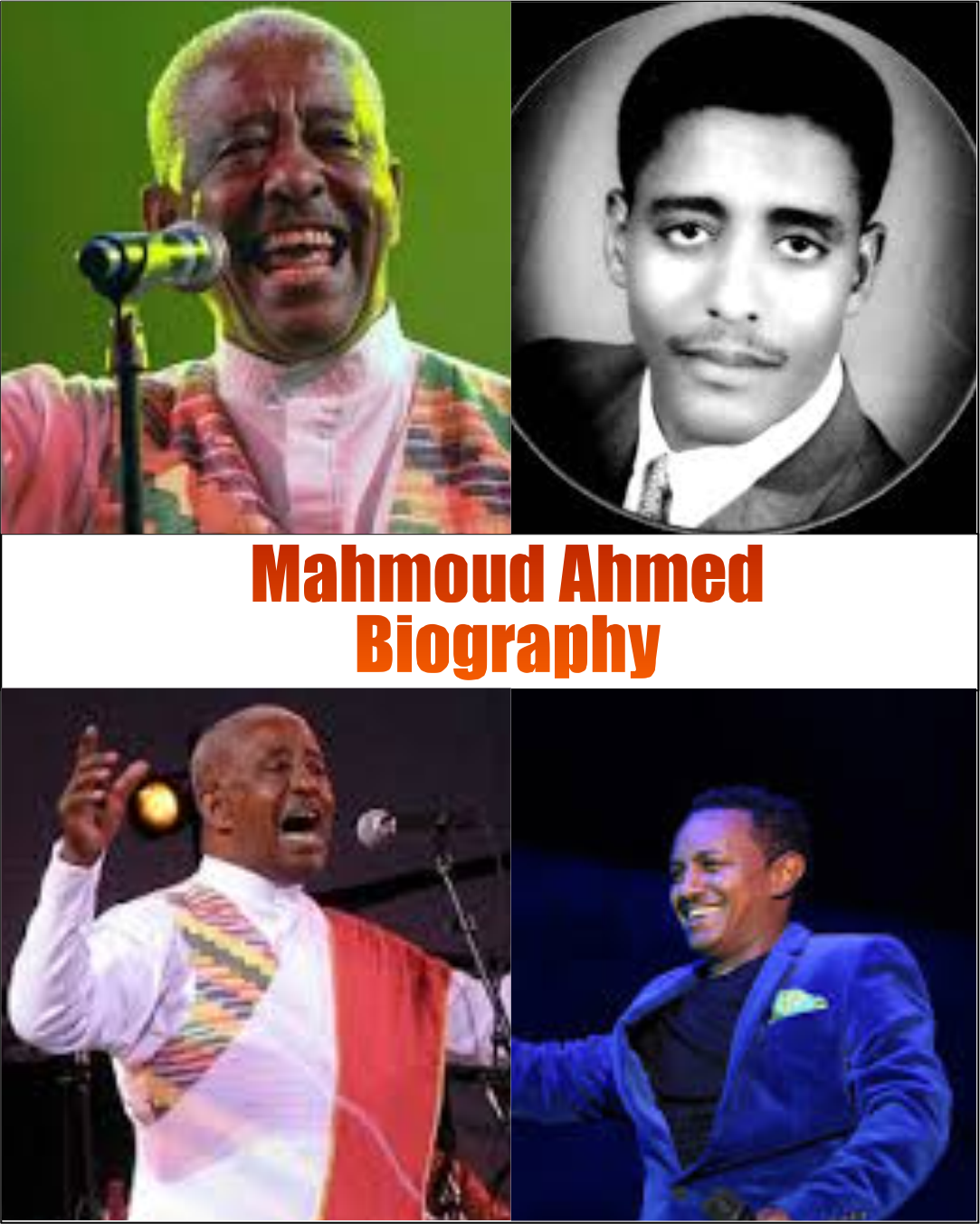
Mahmoud Ahmed Biography
The Mahmoud Ahmed Biography: The Voice Rediscovered That Redefined Ethiopian Music
Explore the life of Mahmoud Ahmed, the Ethiopian legend whose music was once overlooked at home but later hailed globally as one of Africa’s greatest musical treasures.
The Voice That Waited to Be Heard
Some artists rise quickly, embraced by their time.
Others create something powerful… and wait.
Mahmoud Ahmed belongs to the second kind—a voice that carried immense depth, yet for years moved quietly, almost unnoticed beyond certain circles.
He did not chase the world.
The world found him later.
And when it did, it realized it had missed something extraordinary.
His music—rich, emotional, and deeply rooted in Ethiopian tradition—would eventually be called one of the greatest bodies of work in African music.
But that recognition did not come easily.
It came through time, patience, and rediscovery.
Mahmoud Ahmed Biography
| Information | Details |
|---|---|
| Full Name | Mahmoud Ahmed |
| Date of Birth | May 8, 1941 |
| Age | 85 years (as of 2026) |
| Place of Birth | Addis Ababa, Ethiopia |
| Nationality | Ethiopian |
| Occupation | Singer |
| Known For | Iconic voice in Ethiopian popular music and Ethio-jazz era |
| Breakthrough Album | Ere Mela Mela (1975) |
| Awards | Recognized internationally, including BBC World Music Award (2007) |
A Beginning Far From the Spotlight
Mahmoud Ahmed was born in 1941 in Addis Ababa, Ethiopia.
His early life was not shaped by music industry ambition or structured training. Instead, it was grounded in ordinary work. As a young man, he held various jobs, including working as a shoe-shiner and later in a bar.
It was in that bar—almost by chance—that his life began to shift.
Surrounded by musicians and live performances, Mahmoud found himself drawn to the stage. At first, it was not a grand entrance. It was gradual. Observational. Quiet.
But his voice did not stay unnoticed for long.
See also: Cardinal Anthony Olubunmi Okogie Biography: The Archbishop Who Volunteered to Die for a Muslim Woman
A Voice That Carried Emotion
Mahmoud’s singing stood out—not because it was loud or technically overwhelming, but because it felt.
There was a rawness to it.
An emotional weight that seemed to carry stories beyond the lyrics themselves. His phrasing, his tone, his delivery—they connected immediately with listeners who understood the language, and even those who did not.
He began performing with bands in Addis Ababa, eventually joining the Imperial Bodyguard Band—one of the most prominent musical groups in Ethiopia at the time.
This was not just an opportunity.
It was a turning point.
The Golden Age of Ethiopian Music
The late 1960s and early 1970s are often referred to as the golden age of Ethiopian music.
Nightclubs thrived. Musicians experimented. There was a creative energy that allowed artists to blend traditional sounds with modern influences.
Mahmoud became a central figure in this movement.
His music drew from Ethiopian scales and melodies, but incorporated elements of funk, soul, and jazz. The result was a sound that felt both deeply local and subtly global.
It was music that moved—but also lingered.
The Album That Would Travel Decades
In 1975, Mahmoud released an album that would later define his legacy: Ere Mela Mela.
At the time, its impact was not immediate or universal.
Ethiopia was entering a period of political upheaval under the Derg regime. Cultural expression became more constrained. The vibrant music scene began to fade.
Like many works from that era, the album did not receive the recognition it deserved within its original context.
But its story was not over.
Silence, Then Rediscovery
For years, Mahmoud’s music existed in relative obscurity outside Ethiopia.
Records circulated locally, but the global music world remained largely unaware.
Then, decades later, something changed.
Collectors and music enthusiasts in Europe began exploring African vinyl archives. They discovered recordings from Ethiopia’s golden era—among them, Ere Mela Mela.
What they heard was striking.
The album did not feel dated.
It felt timeless.
A Second Life Abroad
The reissue of Ere Mela Mela introduced Mahmoud Ahmed to a new audience.
Listeners who had never encountered Ethiopian music found themselves drawn into its texture, its rhythm, its emotional depth.
Critics praised it. Musicians studied it. It began appearing on lists of essential African recordings.
What had once been overlooked was now celebrated.
Mahmoud, who had never chased international recognition, found himself at the center of it.
Returning to the Stage
With renewed interest came new opportunities.
Mahmoud began performing internationally, bringing his music to audiences far beyond Ethiopia. Concert halls in Europe and North America welcomed a sound that felt both unfamiliar and deeply resonant.
His performances carried the same authenticity that had defined his early years.
There was no attempt to adapt or modernize for foreign audiences.
He remained rooted in his sound.
And that authenticity became his strength.
A Voice That Defines an Era
Mahmoud Ahmed is often associated with Ethio-funk—a blend of Ethiopian musical structures with elements of funk and soul.
But his contribution goes beyond genre labels.
He became a voice that defined a particular moment in Ethiopian cultural history—a moment of creativity, expression, and transformation.
Through his music, that moment continues to live.
Recognition That Came With Time
Unlike many artists whose recognition aligns with their peak years, Mahmoud’s global acknowledgment came later.
But when it came, it was deep.
He was not treated as a novelty or a rediscovered curiosity.
He was recognized as a master.
His work was placed alongside some of the most significant recordings in African music history.
And importantly, it was listened to—not just heard.
Still Standing, Still Singing
Even as years passed, Mahmoud remained active.
His voice evolved, but its essence stayed intact. There was a maturity, a depth that only time can bring.
He continued to perform, to connect, to remind audiences of the power of music that is rooted in truth rather than trend.
He did not need reinvention.
He had already created something lasting.
The Power of Patience
Mahmoud Ahmed’s story is not one of sudden fame or rapid ascent.
It is a story of patience.
Of creating something meaningful without immediate validation. Of continuing, even when the world is not yet paying attention.
And of eventually being heard—not because of timing, but because of substance.
The Echo of Addis Ababa
Listening to Mahmoud’s music today feels like stepping into a different time.
The sounds of Addis Ababa’s golden era—its clubs, its musicians, its energy—come alive through his voice.
But it is not just nostalgia.
It is presence.
His music does not feel like a relic.
It feels alive.
Closing Reflection
Some artists are discovered instantly.
Mahmoud Ahmed was discovered twice.
Once by those who heard him in his early years.
And again, decades later, by a world finally ready to listen.
He did not change his sound to fit the times.
The times changed—and found him waiting.
Frequently Asked Questions
1. Who is Mahmoud Ahmed?
Mahmoud Ahmed is a legendary Ethiopian singer celebrated for his powerful voice and lasting influence on Ethiopian music.
2. Why is Mahmoud Ahmed famous?
He became famous for his contributions during the golden age of Ethiopian music and for blending traditional sounds with Ethio-jazz influences.
3. What is Mahmoud Ahmed’s most famous work?
His album Ere Mela Mela (1975) is widely regarded as a classic and helped introduce Ethiopian music to international audiences.
4. Has Mahmoud Ahmed won any awards?
Yes — he received global recognition, including a BBC World Music Award, honoring his contribution to world music.
5. What is Mahmoud Ahmed’s legacy?
His legacy lies in preserving and promoting Ethiopian musical heritage while influencing generations of African and global artists.