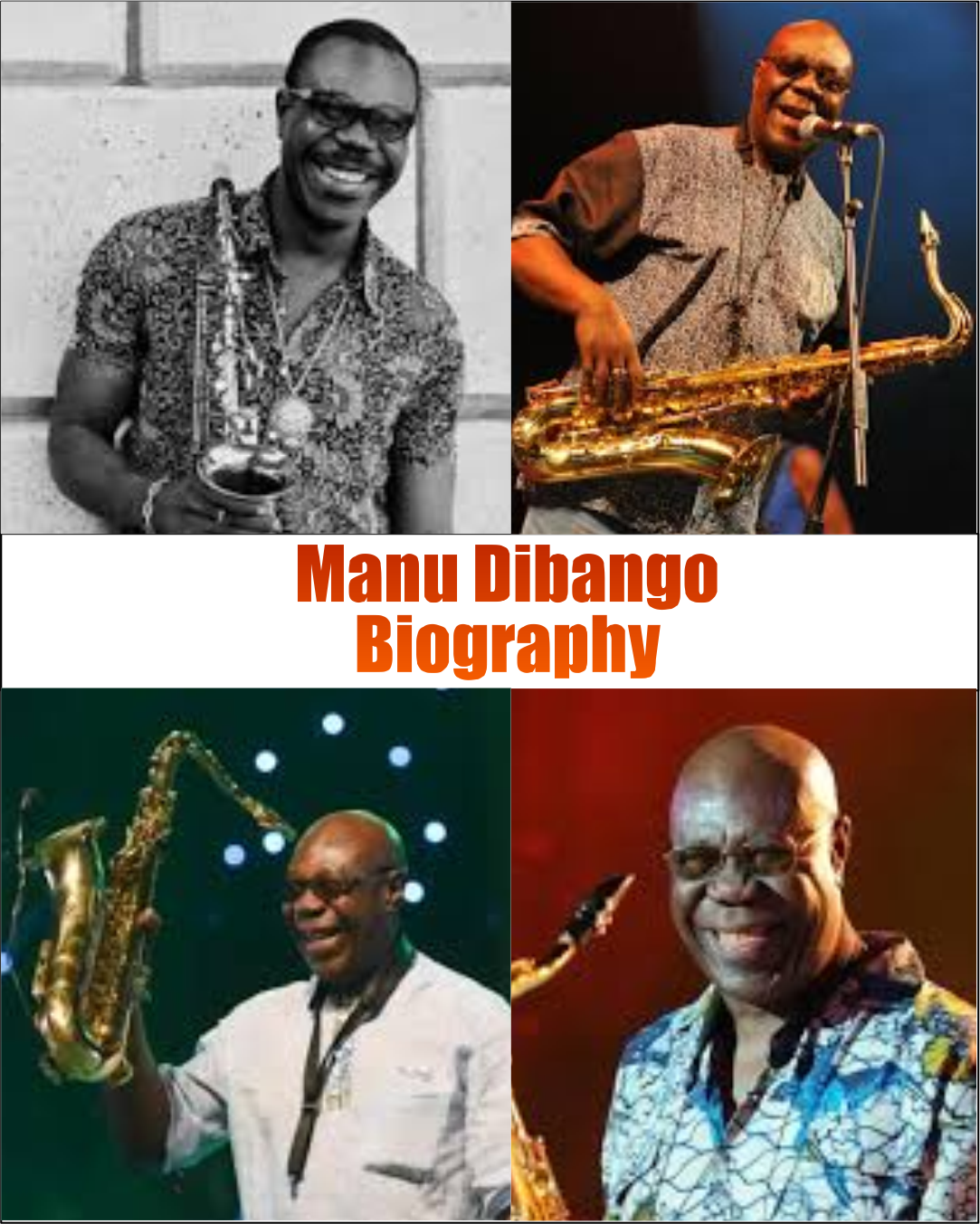
Manu Dibango Biography
The Manu Dibango Biography: The Saxophonist Who Took African Sound to the World
Discover the life of Manu Dibango, the Cameroonian legend who pioneered Afro-jazz, created Soul Makossa, and influenced global music across generations.
The Sound That Crossed Every Border
Some musicians stay within genres.
Others move between them.
Manu Dibango did something different—he dissolved the boundaries entirely.
His music was never confined to one place, one style, or one audience. It moved freely, blending African rhythms with jazz, funk, and soul, creating a sound that felt both rooted and global.
At a time when African music was often categorized narrowly, Dibango expanded its reach.
He did not ask for permission.
He simply played—and the world listened.
Manu Dibango Biography
| Information | Details |
|---|---|
| Full Name | Emmanuel N’Djoké Dibango |
| Stage Name | Manu Dibango |
| Date of Birth | December 12, 1933 |
| Date of Death | March 24, 2020 |
| Age at Death | 86 years |
| Place of Birth | Douala, Cameroon |
| Nationality | Cameroonian |
| Occupation | Musician, Saxophonist, Composer |
| Known For | Global hit Soul Makossa and pioneering Makossa |
A Journey That Began Far From Home
Manu Dibango was born on December 12, 1933, in Douala, Cameroon.
His early life was shaped by both tradition and transition. Cameroon, like many African countries at the time, was navigating colonial influence while maintaining its cultural identity.
As a young boy, Dibango was sent to France for education.
It was a move that would change everything.
In Europe, he encountered jazz—music that would become central to his artistic identity. He listened, studied, and eventually began playing the saxophone, an instrument that would define his career.
See also: Miriam Makeba Biography: The Exiled Voice Who Sang Africa to the World
Learning a New Language Through Music
Jazz offered Dibango something unique.
It was structured, yet open. Rooted, yet flexible.
He immersed himself in it, performing in clubs, learning from other musicians, and developing his own style. But even as he embraced jazz, he did not abandon his African roots.
Instead, he began to think about how the two could coexist.
How African rhythms could interact with jazz improvisation.
How different musical traditions could speak to each other.
These questions would shape his work for decades.
Returning With a New Vision
After years in Europe, Dibango returned to Africa, bringing with him not just technical skill, but a new perspective.
He began working in various musical settings, including in Congo, where he was part of a vibrant music scene that blended local styles with international influences.
These experiences broadened his understanding.
He was no longer just a jazz musician.
He was becoming something else.
The Birth of Afro-Jazz
Dibango’s approach to music gradually evolved into what would be recognized as Afro-jazz.
It was not a strict formula.
It was a fusion.
African rhythms formed the foundation. Jazz provided structure and improvisation. Funk and soul added groove and energy.
The result was a sound that felt dynamic, adaptable, and distinctly his.
He was not imitating Western music.
He was integrating it—on his own terms.
Soul Makossa: A Global Breakthrough
In 1972, Dibango released a track that would change his career—and influence music far beyond it.
“Soul Makossa.”
The song, built around a hypnotic groove and a simple yet memorable vocal line, gained unexpected traction. It spread beyond Cameroon, reaching audiences in the United States and Europe.
Its impact was immediate.
Clubs played it. DJs embraced it. Listeners connected with its rhythm, even if they did not understand the language.
It became one of the first African songs to achieve widespread international recognition.
Influence That Traveled Quietly
“Soul Makossa” did more than succeed.
It influenced.
Its groove, its structure, its vocal style found their way into other works. Most notably, elements of the song were later echoed in music by Michael Jackson.
The connection highlighted something important.
African music was not just being heard.
It was shaping global sound.
A Career Built on Exploration
Dibango did not allow himself to be defined by a single hit.
He continued to explore, recording across genres, collaborating with artists, and experimenting with new ideas.
His work moved through jazz, funk, reggae, and even electronic influences, always anchored by his saxophone and his sense of rhythm.
He approached music as a space of possibility.
Not limitation.
A Cultural Connector
Throughout his career, Dibango acted as a bridge.
Between Africa and the world. Between tradition and innovation. Between genres that were often kept separate.
He performed internationally, bringing African music to audiences who might not have encountered it otherwise.
But he did so without losing authenticity.
He did not dilute his sound.
He expanded it.
Recognition and Respect
Over the years, Dibango received recognition for his contributions to music.
But perhaps more significant than awards was the respect he earned—from fellow musicians, from critics, from listeners.
He was seen as a pioneer.
Someone who had not only created music, but opened doors.
The Later Years
Even in his later years, Dibango remained active.
He continued to perform, to record, to engage with music as a living practice. His presence carried the weight of experience, but also the curiosity of someone still exploring.
He did not settle into nostalgia.
He remained present.
A Final Chapter Marked by History
In 2020, the world faced a global pandemic.
Among its many losses was Manu Dibango, who passed away on March 24, 2020, at the age of 86 due to complications related to COVID-19.
He became one of the first internationally recognized musicians to die from the virus.
It was a moment that underscored the scale of what the world was facing—and the breadth of what had been lost.
A Legacy That Continues to Play
Dibango’s influence did not end with his passing.
His music continues to be played, studied, and appreciated. His approach to fusion remains relevant, inspiring artists who seek to blend traditions without losing identity.
He showed that music could travel.
That it could connect.
That it could evolve without forgetting where it came from.
The Sound That Still Moves
Listening to Manu Dibango today feels immediate.
The grooves still work. The saxophone still speaks. The rhythms still invite movement.
There is no sense of distance.
Only continuity.
Closing Reflection
Some musicians stay within boundaries.
Manu Dibango removed them.
He took sounds from different worlds and allowed them to exist together—without hierarchy, without limitation.
And in doing so, he created something lasting.
Not just music.
But connection.
Frequently Asked Questions
1. Who is Manu Dibango?
Manu Dibango was a legendary Cameroonian musician and saxophonist known for blending African music with jazz, funk, and soul.
2. Why is Manu Dibango famous?
He became globally famous for his 1972 hit Soul Makossa, which helped introduce African music to international audiences.
3. What is Makossa music?
Makossa is a popular music style from Cameroon characterized by rhythmic basslines and danceable grooves, which Dibango helped popularize worldwide.
4. Did Manu Dibango influence global music?
Yes — his music influenced international artists, and elements of Soul Makossa were later echoed in global pop and dance music.
5. What is Manu Dibango’s legacy?
His legacy lies in bridging African and global music scenes, paving the way for African artists on the international stage.