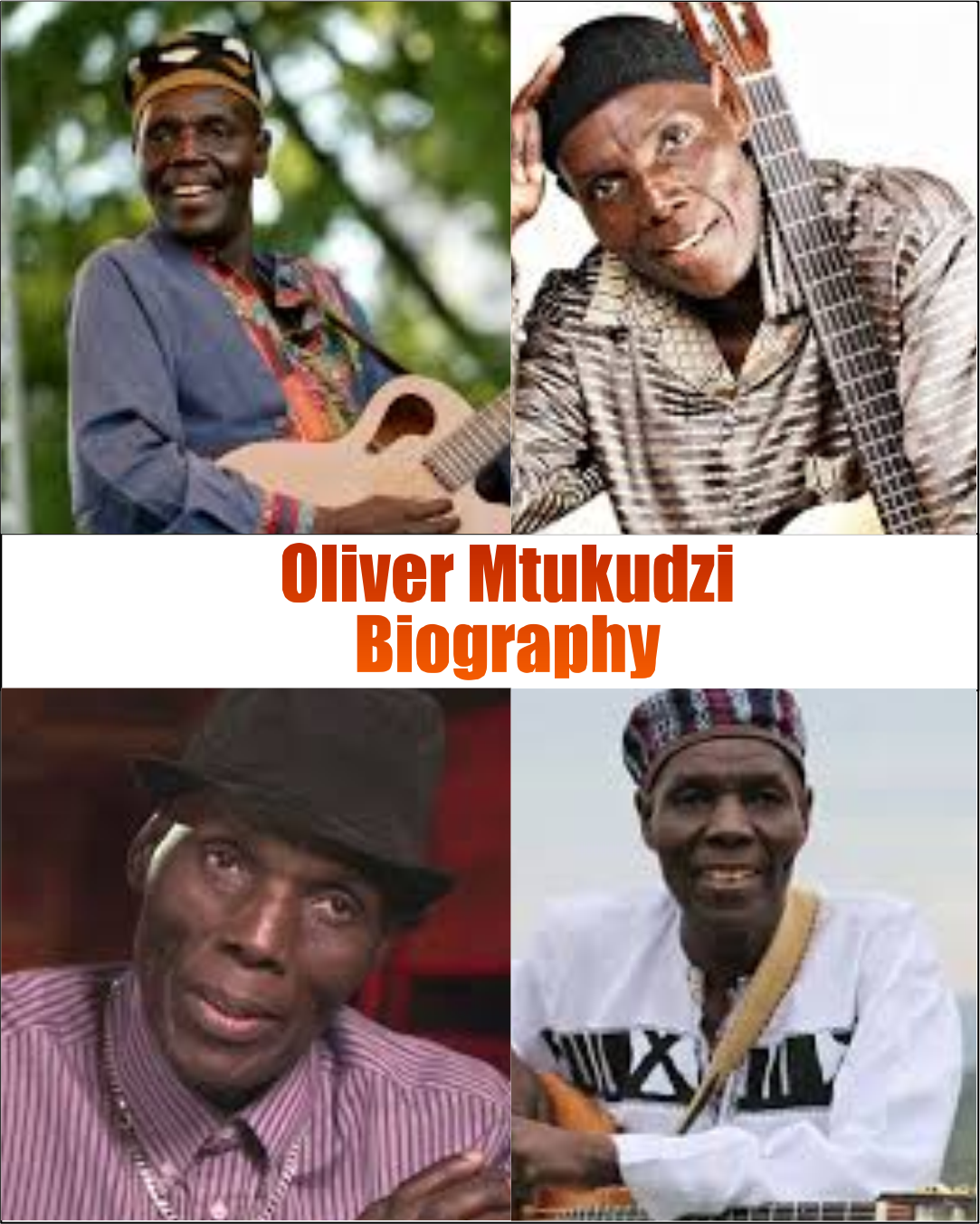
Oliver Mtukudzi Biography
The Oliver Mtukudzi Biography: The Voice That Carried Zimbabwe’s Conscience
Explore the life of Oliver Mtukudzi, the Zimbabwean legend who used music to confront social issues like HIV/AIDS, child soldiers, and political struggle for over four decades.
The Voice That Spoke When Others Stayed Silent
Some artists create music to entertain.
Others create music to endure.
Oliver Mtukudzi created music to speak—calmly, consistently, and without fear—about the things many preferred not to confront.
He did not shout.
He did not provoke through spectacle.
Instead, he used a steady voice, layered melodies, and deeply intentional lyrics to address the realities of his country: illness, inequality, loss, and resilience.
For more than four decades, he became something rare.
Not just a musician.
But a conscience.
Oliver Mtukudzi Biography
| Information | Details |
|---|---|
| Full Name | Oliver “Tuku” Mtukudzi |
| Stage Name | Oliver Mtukudzi |
| Date of Birth | September 22, 1952 |
| Date of Death | January 23, 2019 |
| Age at Death | 66 years |
| Place of Birth | Highfield, Harare, Zimbabwe |
| Nationality | Zimbabwean |
| Occupation | Singer, Songwriter, Guitarist |
| Known For | Pioneering Tuku music |
A Beginning Rooted in Simplicity
Oliver Mtukudzi was born on September 22, 1952, in Highfield, a township in Harare, Zimbabwe.
His early life was not marked by privilege or access to major opportunities. Like many around him, he grew up in an environment shaped by economic challenges and social complexity.
Music entered his life gradually.
It was present in the community—in gatherings, in informal performances, in everyday expression. He began singing and playing guitar at a young age, developing a style that felt natural rather than constructed.
There was no clear blueprint for what his career would become.
But there was a voice.
And it carried something distinct.
Read also: Pastor Tunde Bakare Biography: The Muslim Boy Who Became a Christian Prophet
The Birth of Tuku Music
As Mtukudzi developed as an artist, he began shaping a sound that would later be known as Tuku music.
It drew from multiple influences—traditional Shona rhythms, contemporary African styles, and subtle elements of international genres. But what defined it was not just sound.
It was feeling.
His voice, deep and textured, became the center of his work. Around it, he built arrangements that were rich but not overwhelming, allowing the message to remain clear.
Tuku music was not about complexity for its own sake.
It was about clarity.
Singing About What Others Avoided
From early in his career, Mtukudzi made a deliberate choice.
He would not avoid difficult subjects.
At a time when topics like HIV/AIDS were often surrounded by stigma and silence, he addressed them directly. His songs spoke about the impact of the epidemic—on families, on communities, on individuals.
But he did so with care.
His lyrics were not accusatory. They were reflective, compassionate, and grounded in understanding.
He also addressed issues like child soldiers, social inequality, and political tension—always with a tone that invited thought rather than confrontation.
A Style Built on Respect
One of the reasons Mtukudzi’s music resonated so widely was his approach.
He did not position himself above his audience.
He spoke as part of the community.
His songs often carried a conversational quality—like advice shared quietly, rather than declarations made loudly. This made his messages more accessible, more personal.
Listeners did not feel lectured.
They felt understood.
Consistency Over Decades
Mtukudzi’s career spanned more than 40 years.
During that time, he released dozens of albums, each building on the foundation he had established. His sound evolved, but never lost its core identity.
He did not chase trends.
He did not reinvent himself for relevance.
Instead, he remained consistent—refining his approach, deepening his themes, and maintaining a clear sense of purpose.
This consistency became part of his strength.
Recognition Across Africa and Beyond
As his work grew, so did his reach.
Mtukudzi became one of Zimbabwe’s most recognized cultural figures, performing across Africa and internationally. His music connected with audiences beyond language barriers, carried by its emotion and sincerity.
He collaborated with artists from different backgrounds, expanding his influence while maintaining his distinct voice.
Recognition came in the form of awards, honors, and widespread respect.
But more importantly, it came from listeners.
A Presence That Carried Weight
On stage, Mtukudzi’s presence was understated but powerful.
He did not rely on elaborate production or high-energy theatrics. His performances were grounded, focused, and emotionally direct.
When he sang, the room listened.
There was a sense that what he was saying mattered—not just as music, but as reflection.
Addressing HIV/AIDS Through Music
One of the most significant aspects of Mtukudzi’s work was his engagement with HIV/AIDS awareness.
At a time when misinformation and stigma were widespread, his songs helped open conversations. He approached the subject with sensitivity, emphasizing understanding, compassion, and responsibility.
His work contributed to broader efforts to address the crisis—not through policy or activism alone, but through cultural influence.
He made it possible to talk about what had been difficult to name.
A National Figure
Over time, Mtukudzi became more than an artist.
He became a national figure.
His music was part of Zimbabwe’s cultural fabric—played in homes, at events, in moments of reflection. His voice became associated with guidance, with stability, with continuity.
He was not just reflecting society.
He was helping shape its conversations.
The Later Years
Even in later years, Mtukudzi remained active.
His voice, though aged, retained its depth. His performances continued to draw audiences. His commitment to meaningful music did not waver.
There was no sense of retreat.
Only continuation.
The Final Goodbye
Oliver Mtukudzi passed away on January 23, 2019, at the age of 66.
The response was immediate and widespread.
Across Zimbabwe and beyond, people mourned—not just the loss of a musician, but the loss of a voice that had accompanied them through decades of change.
A Legacy That Still Speaks
Mtukudzi’s music continues to resonate.
His songs remain relevant, addressing issues that persist. New generations discover his work, finding in it the same clarity and sincerity that defined his career.
His influence can be heard in artists who approach music with intention—who see it as more than entertainment.
The Quiet Power of His Voice
What made Mtukudzi remarkable was not volume or spectacle.
It was steadiness.
He did not need to dominate attention.
He earned it.
Through consistency, through honesty, through a clear understanding of what he wanted his music to do.
Closing Reflection
Some artists are remembered for their sound.
Oliver Mtukudzi is remembered for what his sound carried.
Understanding. Reflection. Responsibility.
He did not avoid difficult conversations.
He entered them—calmly, thoughtfully, and without compromise.
And in doing so, he left behind something lasting.
Not just music.
But meaning.
Frequently Asked Questions
1. Who is Oliver Mtukudzi?
Oliver Mtukudzi was a legendary Zimbabwean musician known for his deep, soulful voice and his unique musical style rooted in African rhythms.
2. Why is Oliver Mtukudzi famous?
He is famous for creating and popularizing Tuku music, a genre that blends traditional Zimbabwean sounds with modern influences.
3. What are Oliver Mtukudzi’s most popular songs?
Some of his well-known songs include Todii, Neria, and Wasakara, which carry strong social and emotional messages.
4. What themes did Oliver Mtukudzi address in his music?
His music often addressed social issues such as HIV/AIDS awareness, relationships, morality, and community values.
5. What is Oliver Mtukudzi’s legacy?
He left behind a powerful legacy as one of Africa’s greatest musicians, influencing generations and using music as a tool for education, healing, and social change.