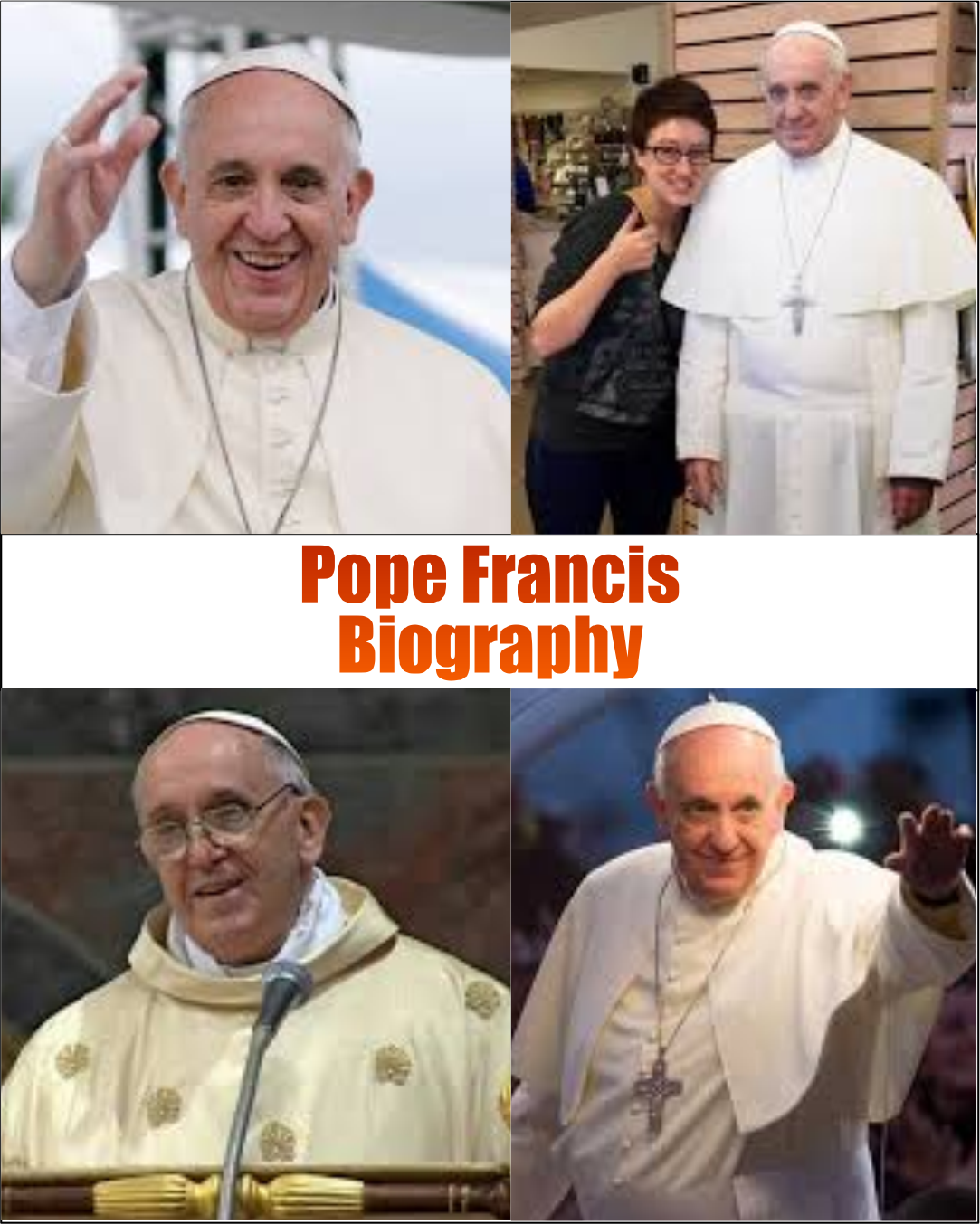
Pope Francis Biography
The Pope Francis Biography: The Humble Shepherd Who Changed the Catholic Church and the World
An intimate, narrative biography of Pope Francis—his early spiritual journey, calling, teachings, controversies, influence on disciples and critics, leadership of the world’s largest church, lifestyle debates, lasting global legacy, and the impact of his moral voice on society.
A Heart Lifted Beyond Borders
When Jorge Mario Bergoglio became Pope Francis in 2013, the world saw more than a new pontiff—he witnessed an unlikely shepherd who would challenge centuries-old expectations of papal leadership. Born into humble circumstances in Buenos Aires, Argentina, Francis was the first pope from the southern hemisphere, the first Jesuit to hold the office, and in many ways a reflection of the global cry for compassion, justice, and inclusion within faith. His journey from the crowded streets of Buenos Aires to the ancient halls of the Vatican was not just a climb up ecclesiastical ranks; it was a pilgrimage shaped by human frailty, moral conviction, and a deeply personal sense of divine calling.
Pope Francis Biography
| Information | Details |
|---|---|
| Full Name | Jorge Mario Bergoglio |
| Papal Name | Pope Francis |
| Date of Birth | December 17, 1936 |
| Age | 89 years (as of 2026) |
| Place of Birth | Buenos Aires, Argentina |
| Nationality | Argentine |
| Occupation | Catholic Priest, Jesuit, Pope |
| Religious Role | Head of the Roman Catholic Church |
| Known For | Humility, reform efforts, and advocacy for the poor |
Early Spiritual Journey: Buenos Aires and Beyond
Jorge Mario Bergoglio was born on December 17, 1936, in the Flores neighborhood of Buenos Aires to Italian immigrant parents who carried with them the rhythms of Catholic devotion and stories of hope in a new land. His childhood was shaped by the echoes of tradition and the vibrant life of Argentina’s capital—where family, faith, and service intermingled in daily rituals. His grandmother in particular became an early spiritual anchor, introducing him to prayer, mercy, and the sense that faith could be a living gesture rather than merely a set of doctrines.
Even before his formal training, Bergoglio navigated ordinary life with a spirit that hinted at something more. He studied to become a chemical technician and worked modest jobs, including laboratory work and even serving as a bar bouncer. These experiences grounded him in the everyday realities of people—laboring, striving, and searching for meaning. In his early twenties, a severe bout of pneumonia led to the partial removal of his lung, a physical trial that deepened his interior life and sharpened his sense of spiritual direction.
See also: Cardinal Anthony Olubunmi Okogie Biography: The Archbishop Who Volunteered to Die for a Muslim Woman
A Calling Felt Deep Within
The pivotal moment in Bergoglio’s spiritual journey came not in grand revelation but in quiet personal transformation. In 1953, after a profound experience during confession, he later said he felt changed in his core—convinced that God was calling him to a life of service through the priesthood. Shortly thereafter, he entered the Jesuit novitiate in 1958 and embraced a life shaped by intellectual rigor and spiritual depth, eventually earning a licentiate in philosophy and later theology.
His ordination as a priest in 1969 marked the beginning of decades of vocational dedication. As a teacher, seminary rector, and spiritual director, Bergoglio became known for both discipline and devotion. These early years were formative, challenging and refining his understanding of ministry as rooted in humility rather than hierarchy.
Teachings and Doctrines: Mercy Above All
Bergoglio’s theological orientation combined deep fidelity to core Catholic doctrine with a pastoral emphasis that reached toward the margins of society. Throughout his ministries prior to becoming pope—and especially during his papacy—he stressed mercy, simplicity, and compassion as central pillars of faith practice. Rather than positioning the church as a fortress defending dogma, he envisioned it as a hospital for the wounded: a community that heals rather than scolds.
As Pope Francis, this vision became codified in key teachings like his landmark environmental encyclical Laudato si’, which reframed the ecological crisis as a moral and spiritual concern, urging care for the Earth as an act of faith. He also emphasized mercy on issues like divorce, immigration, and poverty, encouraging a church that listens first before it pronounces judgment.
Controversies and Criticisms: Between Reform and Tradition
With vision often comes resistance, and Francis’s leadership was no exception. Critics from within the church’s conservative wings accused him of diluting centuries-old teaching, particularly on matters of sexuality, liturgical practice, and ecclesiastical discipline. At the same time, more progressive voices sometimes saw his reforms as too cautious or insufficiently radical—especially on topics like ordaining women or married priests. In academic and media circles, his approach was branded by some as contradictory or ambiguous, revealing the complex balancing act of leading a global institution.
Controversies also shadowed his past, such as debates about his role during Argentina’s “Dirty War” in the late 1970s and early 1980s—when two Jesuit priests were detained under the military dictatorship. Some critics accused him of not doing enough to protect them, while defenders argue he worked quietly behind the scenes for their safety. Such episodes illustrate the moral complexities that accompanied his ascent.
Growth of the Church and Ministry Under Francis
Despite institutional challenges, Pope Francis’s influence helped shape the Catholic Church in profound ways. His pastoral emphasis reinvigorated local ministries that focused on outreach to the poor, refugees, and the socially marginalized. As archbishop of Buenos Aires, he doubled the number of priests serving in impoverished neighborhoods, earning him the moniker “villero bishop”—a leader who walked the dust of shantytowns rather than ascending to clerical privilege.
In the Vatican, his leadership catalyzed synods and councils aimed at decentralizing decision-making and enhancing lay participation. He appointed cardinals from diverse corners of the world, shifting the composition of the church’s leadership to reflect a truly global institution.
Influence on Followers: A Pontiff of the People
Francis’s voice resonated far beyond Catholic pews. Many found in him a moral authority that spoke to contemporary anxieties—about inequality, climate crisis, and the role of religion in public life. His rejection of pomp, such as choosing simpler residences and refusing formal limousines, embodied a pastoral humility rare in modern leadership. This approach cultivated a broad following among young Catholics, ecumenical communities, and even non-Christians who appreciated his emphasis on mercy and social solidarity.
Lifestyle and Wealth: A Humble Witness
Unlike many predecessors, Pope Francis consciously embraced a lifestyle of simplicity. He resided in a guesthouse rather than the stately papal apartments, ate modest meals, and preferred informal encounters over ceremonial grandeur. These choices weren’t merely symbolic—they spoke to his conviction that spiritual authority is rooted in service, not status.
Though the Vatican remains an institution with vast material resources, Francis consistently championed fiscal responsibility and transparency, insisting the church’s wealth should serve human need.
Legacy and Global Reach
Francis’s legacy is multilayered. He remains one of the most consequential religious figures of the early 21st century—reshaping perceptions of the papacy while navigating the tectonic shifts facing global religion. Under his leadership, the Catholic Church projected itself as an advocate for social justice, climate action, and dialogue across faith boundaries. Even in regions where Catholic adherence continues to decline, like parts of Latin America, his influence on moral discourse has been profound.
Impact on Society and Morality
Beyond ecclesiastical structures, Pope Francis influenced broader societal conversations about inclusion, human rights, and ecological stewardship. His moral authority lent weight to anti-poverty measures, climate commitments, and more humane immigration policies in public discourse. By framing these issues within a spiritual context, he invited believers and secular audiences alike to consider morality as intrinsic to global responsibility.
A Shepherd for a Changing World
Pope Francis’s life was an arc from humble streets to global significance. Through trials and triumphs, controversy and praise, he remained committed to a vision of faith that reached beyond sanctuaries into streets and cities where life’s most urgent questions unfold. His legacy—rooted in mercy, grounded in humility, and echoed in millions of hearts—will continue to shape how religion intersects with the moral challenges of a complex, striving world.
Frequently Asked Questions
1. Who is Pope Francis?
Pope Francis is the head of the Roman Catholic Church and the first pope from Latin America, known for his humble lifestyle and progressive approach to leadership.
2. Why is Pope Francis famous?
He is widely known for his emphasis on compassion, social justice, and care for the poor, as well as his efforts to reform the Church.
3. What makes Pope Francis different from previous popes?
He is known for his simple lifestyle, openness to dialogue, and willingness to address modern global issues such as climate change and inequality.
4. What are Pope Francis’ major teachings?
His teachings focus on mercy, inclusion, environmental responsibility, and human dignity.
5. What is Pope Francis’ legacy?
His legacy lies in reshaping the global image of the Catholic Church by promoting humility, compassion, and engagement with contemporary societal challenges.